Chemistry Raw Material
Teacher Interview Emails


Chemistry Subjects : Science 8/9/10, Science Chemistry 11 / 12 and Advanced Placement Chemistry 12
Science 8: This course includes fun lab activities, inquiry projects and collaborative projects and class work. This course also influences a positive attitude to science and understanding the importance of it in the real world. The big topics in chemistry include kinetic molecular theory and Atomic Theory.
Science 9: This course also projects the values of Science 8. During the year, students will investigate in Chemistry the Electron arrangement of atoms impacts their chemical nature and the Formation of Compounds. This course involves lab experiments, demonstrations and other activities.
Science 10: This course develops your skills learned from science 8 & 9. Students will learn how chemical processes require energy change as atoms are rearranged in the chemistry section of the course. The main goal of the course is to help students become aware and concerned about the physical world.
Chemistry 11: This is a course that will further introduce you to chemistry that will enhance your skills in the laboratory and how to deal with problem solving and analysis of data using extensive scientific concepts! Various options such as nuclear chemistry, gases, biochemistry, environmental and industrial chemistry will be offered. A scientific calculator is crucial for this course for it includes math problems.
Chemistry 12: In order to be placed into this course you need a strong foundation of the concepts of chemistry 11 to study at an advanced and professional level of the topics such as kinetics, chemical equilibrium, solubility, acids and bases and electrochemistry. Previous laboratory work will be needed and also include qualitative and quantitative analysis. The key skills you will need for this course is problem solving, understanding concepts and critical thinking.
Advanced Placement Chemistry 12: this course is a replica of the general chemistry course students usually take in the first year of university or college. Topics to be covered include: Structure of Matter, Organic Chemistry, States of Matter, Descriptive Chemistry, Reactions, and Laboratory.
https://palmer.sd38.bc.ca/student-information/course-planning-2025-2026
Introduction
Chemistry's main aspects are: Atoms, and how they function, Properties of Matter: the characteristics of atoms, and chemical reactions / compositions. Chemistry is also connected with other forms of science like physics and biology. .
sources:
Chemistry deals with properties, composition, and structure of substances. Chemistry discusses the use of natural substances and the creation of artificial ones. Things we do daily are all chemical processes that date from the beginnings of civilization.
https://www.britannica.com/science/chemistry/Analytical-chemistry
Teacher Interview Recordings (M4A)
Student interview
Frank Xu Gr 10
1.What was your first impression of chemistry?
I find chemistry very interesting and how the characteristics of atoms work
2. What's the coolest experiment you've done so far?
We explored how hydrochloric acid affects the metal zinc
3.What's one thing in chemistry that you find tricky or confusing?
balancing equations.
4.How has studying chemistry changed the way you see things in your daily life?
Now I understand what everything is made of and what some experiments do and make.
5.What's one piece of advice you'd give to a student who is about to start chemistry?
Don’t be stuck on one question when you’re doing a quiz..
Aliza Khan Gr10
1.What was your first impression of chemistry?
its very complicated once you indulge into the course
2.What's the coolest experiment you've done so far?
making volcanoes with baking soda and vinegar to demonstrate acid base reactions
3.What's one thing in chemistry that you find tricky or confusing?
balancing equations
4..How has studying chemistry changed the way you see things in your daily life?
it changed the way that i believe everything works?
5.What's one piece of advice you'd give to a student who is about to start chemistry?
pay VERY close attention towards class discussions
Brianna Zhang: Gr 9
1. What was your first impression of chemistry?
I thought it was about learning about elements and doing experiments to make things explode
2. What's the coolest experiment you've done so far?
Elephant Toothpaste Experiment by mixing different chemicals and their reactions
3. What's one thing in chemistry that you find tricky or confusing?
One thing I find tricky is the measurements and how we’re supposed to do lab procedures.
4. How has studying chemistry changed the way you see things in your daily life?
Chemistry changed the way I see development in the things around me and all the things that react to each other.
5. What's one piece of advice you'd give to a student who is about to start chemistry?
I’d say read lab procedures more than once and if you still don’t get it ask someone you understand before the experiment
How can it benefit your future?
When you’re studying Chemistry, you’re learning how to work with chemical compounds that can be used across industries like energy, water, medicine and materials development.
The skills you can get from learning Chemistry
-
Analytical method development or validation
-
Focused observation
-
Laboratory report writing and presentation of data to scientific and non-scientific audiences
-
Advanced qualitative and quantitative analysis
-
Application of logical, systematic thought processes to understand cause and effect
-
Identification of chemical hazards and facilitation of proper chemical waste disposal
-
Techniques in isolation, purification, analysis, synthesis, and usage of specialized laboratory instruments
CLASSROOM PHOTOS

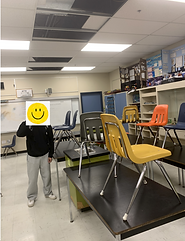


PREP ROOM PHOTOS


PROJECT PHOTOS


EQUIPMENT PHOTOS


There are many job opportunities that require your academics, skills, and experience with your different interests.
Available Jobs:
-
Brewery laboratory analyst
-
Chemical process operator
-
Chemical product developer
-
Chemical technologist
-
Chemist
-
Coatings chemist
-
Clinical research associate
-
Consumer protection specialist
-
Dangerous substance inspector
-
Electrochemist
-
Environmental chemist
-
Food and drug inspector
-
Food chemist
-
Forensic laboratory technician
-
Fuel cell and battery chemist
-
Geochemist
-
Hazardous waste management
-
Health and safety inspector
-
Laboratory technician
-
Medical doctor
-
Medical laboratory technician
-
Nuclear magnetic resonance spectroscopist
-
Oceanographic chemist
-
Patent agent
-
Perfumer
-
Pharmacist
-
Pharmacological chemist
-
Pharmacologist
-
Pollution control technologist
-
Quality control technician
-
Scientific writer
-
Soil chemist
-
Teacher/Professor
-
Technical sales representative
-
Technical writer
-
Toxicologist
-
Wastewater treatment chemist
New Opportunities to help develop your specialty in chemistry.
-
Undergraduate Chemistry Society
Meet other UBC Chemistry students and interact with faculty, through events and programs.
-
UBC Science Co-op
Gain work experience in chemistry between study terms.
-
UBC Chemistry research and awards
Get involved in summer opportunities or take classes that incorporate laboratory experience in chemistry.
-
Departmental research opportunities
Reach out directly to faculty members to ask about potential research positions.
-
Collaborative Research and Training Experience program
Receive training in project management and patent development while getting involved in catalysis research.
-
Mentorship Program for Chemistry Students
Chat with an upper-level UBC Chemistry student to learn about helpful resources and opportunities.
-
Reactive Intermediates Student Exchange
During summer, gain hands-on experience in experimental techniques for the study of chemical or biochemical reaction mechanisms.
-
Canadian Chemistry Conference and Exhibition
Attend national or regional conferences in the summer and connect with chemists across industries and academia.
https://students.ubc.ca/career/your-degree/science/chemistry/
Interview Questions (Teacher)
-
What are the core concepts or skills taught in this subject that are most valuable?
-
How does this subject relate to real world situations?
-
What project will students be doing and their purpose?
-
How could this subject benefit students in the future? (University)
-
What concepts in chemistry do most students find the most challenging, and what strategies do you use to help them understand?
-
What is your teaching style like?
-
What part of chemistry do students like?
-
How many students are in a class?
-
What safety protocols do you need to followfor chemistry?
-
What is a common misconception of chemistry from students?